Dr Marco Funari: research-industry collaborations to conserve heritage buildings
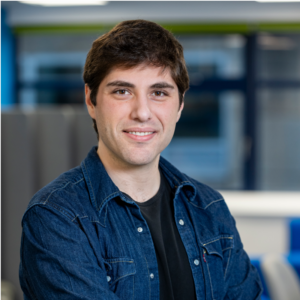
In partnering with the West Horsley Place Trust, Dr
Marco Funari was able to combine his expertise in
historic building conservation with a passion for
structural engineering.
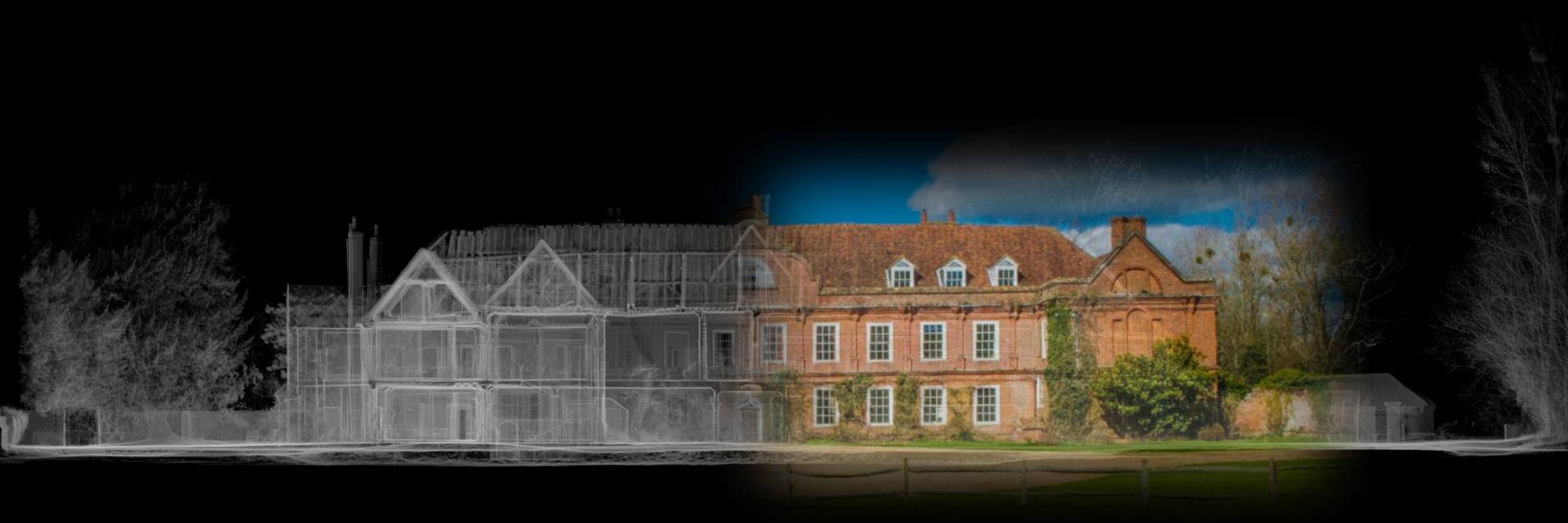
Known as the film set for the BBC’s acclaimed series Ghosts, Marco’s work with the Trust has helped to protect one of Surrey’s most culturally significant heritage sites.
Marco’s path to historic building conservation began with a degree in civil engineering at the University of Calabria, Italy. Combining his academic interest in the structure of buildings with a lifelong passion for history and how knowledge is passed down through time, he positioned himself perfectly to work at the intersection of engineering, heritage, and research.
Marco’s chance to collaborate beyond academia came thanks to colleagues at the University of Surrey through whom he became involved in the preservation of West Horsley Place. To effectively manage the ageing manor house, a comprehensive understanding of its materials, structure, and vulnerabilities was essential.
Working collaboratively with private consultants, the Trust, and software company Alma, Marco developed a detailed 3D ‘digital twin’ of the building. This interactive model was paired with a substantial database highlighting areas requiring urgent attention, allowing stakeholders to visualise risks and prioritise conservation work.
“It makes me very proud to know that my work is going to have an actual impact on society.”
Beyond creating the model, Marco also provided training for consultants, ensuring the technology could support informed, long-term decision-making. The result: a practical, data-driven toolset enabling the Trust to manage and conserve the estate with confidence for generations to come.
Whilst Marco focuses on its digital twin, flocks of visitors recognise West Horsley Place from film and television. It’s authentic character and cinematic landscape has found its way onto the big screen in features such as Enola Holmes, My Cousin Rachel, and the BBC’s much-loved Ghosts.
Reflecting on the collaboration, Marco highlights the importance of communication and shared ownership in successful partnerships. As a non-native English speaker, translating technical concepts into accessible language proved crucial when working across academic and non-academic teams. He also emphasises that the most effective collaborations are built on aligned values, collective decision-making, and mutual responsibility for outcomes.

Marco's top tips
- Learn how to communicate effectively without using technical language.
- Draw on the capabilities of your institution to support you in finding connections.
- Think long-term – every partnership will open new doors and possibilities.
- Be passionate about your collaborations.
“When you put passion into collaborations, you build a network that can open amazing opportunities for the future.”
For Marco, working with industry partners has been the chance for his research to deliver tangible impact. His collaboration with the West Horsley Place Trust not only helped secure the future of a historically and culturally significant building but also expanded his professional network and opened doors to new opportunities. These partnerships allow him to follow his curiosity, explore new research directions, and enhance both his own professional profile and the visibility of his institution.

Fast facts:
What sparked your initial non-academic connections?
- I was approached by the Trust, who were already working with colleagues and wanted my particular expertise.
How did you formalise the relationship?
- The Institute for Sustainability at the University of Surrey formalised the relationship during the first phase of the project through a structured agreement. This was established to align mutual scientific interests, supporting both academic research objectives and the trust’s commitment to preserving the building’s heritage. The collaboration ensured a balanced approach, combining rigorous academic investigation with practical conservation priorities.
How was the collaboration funded?
- The initial phase of the collaboration was funded by the Institute for Sustainability at the University of Surrey through Higher Education Innovation Funding (HEIF). This support was instrumental in establishing a strong track record for the project, positioning the team to pursue further external funding opportunities, including applications to the Royal Society and UK Research and Innovation (UKRI), in partnership with the wider heritage sector.